The Bedtime Reading Queue That Actually Calms You
TL;DR
Doom scrolling keeps you wired because it never ends and never calms. A curated bedtime reading queue — bounded by reading-time estimates and stripped of distractions — is the lowest-friction swap that actually helps you wind down.
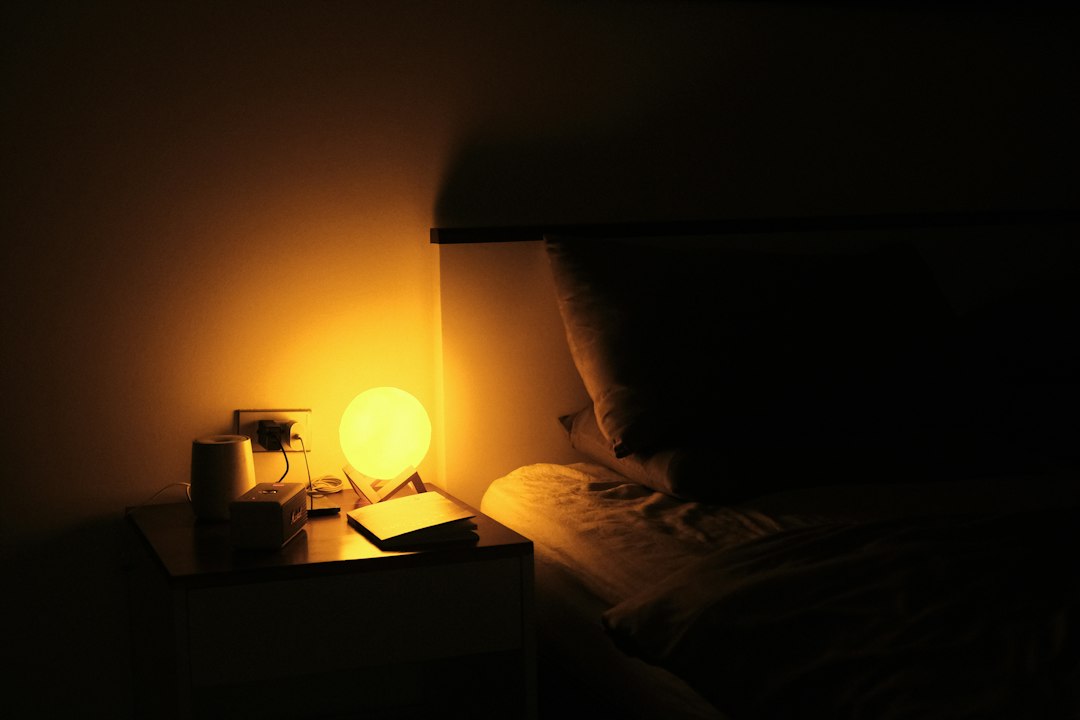
You crawl into bed exhausted, reach for your phone "just to check one thing," and surface forty minutes later more wired than when you started. The feed never ended, nothing felt finished, and sleep feels further away.
That loop isn't a willpower problem. It's a design problem — infinite feeds are built to deny you a stopping point. The fix isn't more discipline. It's giving yourself a different thing to reach for, one with a built-in off switch.
This article walks through why late-night scrolling backfires, and how a small, curated reading queue becomes the lowest-friction replacement for it.
Why doom scrolling sabotages the wind-down
The problem starts with the screen, but it doesn't end there. Exposure to bright, blue-enriched light in the evening suppresses melatonin and nudges your internal clock later, making it harder to fall asleep. Harvard Health has documented how evening screen light disrupts circadian rhythm and sleep quality (health.harvard.edu).
But light is only half of it. The bigger issue is content shape. A social feed has no natural terminus — there's always one more post, one more reply, one more outrage to process. Your brain stays in an alert, anticipatory state precisely when it should be powering down.
Emotionally charged, fragmented content is the opposite of a wind-down cue. You're not relaxing; you're vigilantly monitoring. The American Psychological Association has reported that constant news and media consumption is associated with heightened stress (apa.org).
So the goal for bedtime isn't just "less screen." It's content that ends, content you chose on purpose, and an experience that doesn't fight you for more attention. That's a very different reading object than a feed.
A queue beats a feed because it's finite
The single most important property of a bedtime reading routine is that it has an edge. A feed is infinite by design. A queue is a finite list of things you already decided were worth your time.
That distinction changes your whole relationship with the screen before sleep. Instead of grazing endlessly, you work through a short, intentional stack — and when the stack is done, you're done.
Curate during the day, consume at night
The trick is to separate collecting from reading. During the day, when you stumble on a long article you don't have time for, you save it instead of forcing it into a distracted five-minute skim. By bedtime, you've built a small, personal library of things you found interesting — no algorithm required.
A read-it-later app makes this effortless. Save articles, newsletters, and long reads throughout the day, and they're waiting in a tidy queue when you want them. Omphalis is built exactly for this split: collect now, consume later, on your terms.
Keep the queue short on purpose
Resist the urge to hoard. The point of a bedtime queue isn't to clear a 200-item backlog — that's just a new source of anxiety. Pick two or three pieces. Reading a finite set to completion gives your brain the "task closed" signal that scrolling never does.
Reading-time estimates turn vague intentions into a plan
"I'll read for a bit" is a trap. Without a sense of how long something takes, you either stop mid-article (unsatisfying) or get pulled into something far longer than the time you have (sleep-wrecking).
This is where reading-time estimates quietly do the heavy lifting. When each item in your queue shows "6 min read" or "11 min read," you can match what you read to the energy you actually have left.
Tonight you've got maybe fifteen minutes before your eyes give out? Pick the eight-minute essay and the five-minute explainer. Finish both. Close the loop. That sense of completion is what a feed structurally cannot offer — and it's what lets you set the phone down without that nagging "just one more" pull.
Reading-time estimates also help you plan the arc of your session. Start with the slightly meatier piece while you're more alert, then drift toward something lighter as you fade. You're sequencing your wind-down instead of being yanked around by whatever an algorithm surfaces next.
Omphalis surfaces a reading-time estimate on everything you save, so building a right-sized nightly set takes seconds rather than guesswork.
Distraction-free focus mode removes the exit ramps
Even with a good queue, a cluttered reading screen invites relapse. Sidebars, related-article grids, autoplaying video, comment sections, and notification badges are all exit ramps back into the scroll.
A distraction-free focus mode closes those ramps. Strip the page down to just the words — clean typography, a calm background, no blinking anything — and reading becomes a single, bounded activity instead of a launchpad to six other apps.
The environment does the discipline for you
This matters more than most people admit, because relying on willpower at 11:30pm is a losing bet. The research-backed move is to change the environment so the easy path is the good one. Behavioral science has long held that making a desired behavior low-friction beats trying to resist temptation in the moment; the Sleep Foundation recommends building a consistent, screen-light-minimized wind-down routine for exactly this reason (sleepfoundation.org).
Omphalis's focus mode gives you that calm surface. One article, full screen, nothing competing for a tap. When you finish, there's no "up next" auto-queued to keep you hooked — the session simply ends, the way a bedtime routine should.
Prefer to rest your eyes entirely? Listen instead
Some nights even clean text is too much light. If you'd rather close your eyes completely, you can have your saved articles read aloud in a natural voice and read articles by listening instead. Dim the screen, queue two short pieces, and let the narration carry you toward sleep without any light at all.
Building the routine so it sticks
A routine only works if it's repeatable without effort. Here's a simple pattern that holds up.
Save relentlessly, read selectively. Capture anything interesting during the day without judgment. At night, pick only what fits the time and mood you have. The saving is generous; the reading is deliberate.
Set a hard stop with the clock, not your willpower. Decide "two articles" or "fifteen minutes" before you start, and let the finite queue enforce it. Because the content ends, you don't have to summon the strength to quit — quitting is the default.
Make the swap, don't just forbid the scroll. The reason "stop looking at your phone" fails is that it leaves a vacuum. Replace the scroll with a specific competing ritual: same cozy position, same dim light, different object in your hands. A curated queue is that object.
Let it degrade gracefully. Miss a night? The queue doesn't guilt-trip you or reset a streak. Your saved reads are simply there tomorrow. A good routine survives imperfect weeks.
Over time, the reach-for-the-phone reflex gets re-pointed. The muscle memory is the same — grab device, settle in — but the destination is a calm, finite, chosen set of reads instead of a bottomless feed.
The takeaway
Late-night scrolling fails you because it's infinite, algorithm-driven, and engineered to deny you an ending. A bedtime reading queue flips all three: it's finite, self-curated, and built to close the loop so your brain can actually power down.
Reading-time estimates right-size each session, and a distraction-free focus mode removes the exit ramps back into the scroll. If you want a calmer wind-down tonight, start saving the good stuff to Omphalis and let your bedtime queue — not the feed — be the last thing you reach for.