Hook Listeners in 30 Seconds: Audio Intros That Work
TL;DR
The first 30 seconds decide whether a listener stays or leaves. This guide breaks down what makes an audio hook work, and how a segment-based editor lets you rewrite and re-render just your opening without touching the rest of the episode.
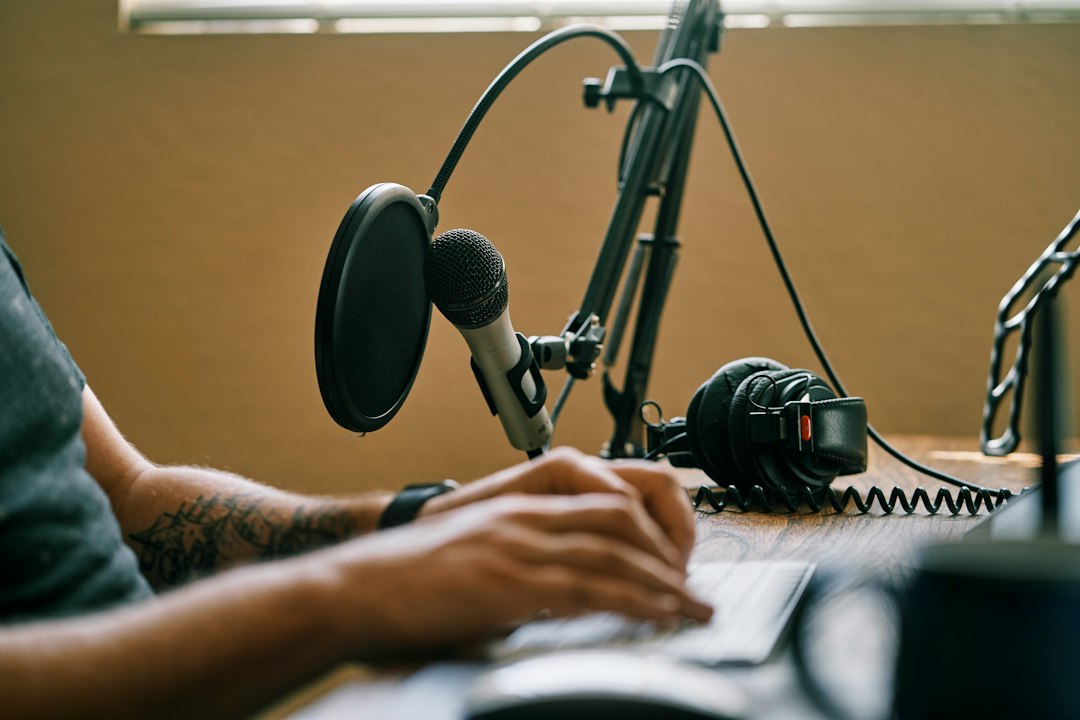
Most people decide whether to keep listening before your intro music even fades. If your opening line is a throat-clear — "Hey everyone, welcome back, hope you're doing well" — you've spent your most valuable seconds saying nothing.
The problem isn't your content. It's the runway. Listeners give you a narrow window to prove the next ten minutes are worth their attention, and vague pleasantries burn it.
Here's what you'll learn: what actually makes an audio hook work, four opening patterns you can steal, and how to iterate on that hook quickly — rewriting and re-rendering just the first 30 seconds without re-producing your whole episode.
Why the First 30 Seconds Decide Everything
Attention online is front-loaded and unforgiving. Nielsen Norman Group's research on web-page behavior found that people abandon pages fastest in the first few seconds — and the longer someone stays, the more likely they are to keep going (Nielsen Norman Group). That pattern was measured for reading, not listening, but the same logic of an early make-or-break window shows up anywhere someone can bail with one tap. Treat your opening as a survival gate.
There's a cognitive reason too. The primacy effect — a well-documented pattern in memory research — means the first thing people hear disproportionately shapes what they remember and expect. A strong open doesn't just retain listeners; it frames how they interpret everything after.
So the first 30 seconds carry two jobs at once. They have to stop the exit — give the listener a reason not to skip — and set the frame for what's coming. A weak hook fails both. A strong hook does both in a single breath.
That's a lot of pressure on a few sentences. Which is exactly why the opening deserves more rewriting than any other part of your script — and why being able to revise it in isolation matters so much.
What a Strong Audio Hook Actually Does
A good hook makes a promise and creates a small tension the listener wants resolved. It answers the unspoken question: why should I care, right now?
Weak openings share a few tells. They warm up instead of starting. They summarize logistics ("in today's episode we'll cover three things"). They bury the interesting part under introductions. Strong openings do the opposite — they lead with the sharpest idea and explain themselves afterward.
Four hook patterns you can steal
- The surprising claim. Open with a counterintuitive statement, then spend the episode earning it. "You don't have a productivity problem. You have a decision problem."
- The specific question. Ask exactly what the listener is wondering. "Why does your best writing always happen at 11 p.m.?"
- The in medias res moment. Drop the listener into a scene already in motion. "The email arrived at 4:58 on a Friday."
- The stakes-first frame. Name what they'll gain or avoid. "By the end of this, you'll never write a boring intro again."
Notice what all four skip: the greeting, the housekeeping, the slow build. You can add your name and show branding after the hook has landed. Front-load the value; back-load the logistics.
If you want a reusable structure to start from, a podcast intro template gives you a scaffold you can drop your hook into — so you're editing a proven shape instead of staring at a blank page.
Write for the Ear, Not the Page
Text that reads well can still sound wrong. Spoken language is shorter, more rhythmic, and more direct than written prose. When you draft a hook, read it aloud before you commit — if you stumble, your listener will too.
A few principles help. Keep sentences short enough to say in one breath. Put the emphasis word near the end, where the ear naturally rests. Cut adjectives that don't earn their place. And vary your rhythm: a punchy three-word sentence hits harder when it follows a longer one.
Delivery matters as much as wording. A pause before your key phrase creates anticipation; a slight slowdown signals importance. In EchoLive's Studio editor, you can shape those beats precisely with visual SSML tools — adding breaks, emphasis, and prosody without hand-writing markup. The same sentence can feel flat or gripping depending on where the silence falls.
This is where writing for audio diverges from writing for text. On the page, readers control their own pace and can re-scan a line. NNG's work on how people read online shows they scan and skip rather than absorb every word (Nielsen Norman Group). Listeners can't scan. They move at your pace, in one direction — so your pacing choices are the reading experience.
Iterate the Hook Without Re-Producing the Episode
Here's the practical bottleneck. Most creators know their intro is weak, but fixing it feels expensive. If your whole episode renders as one block of audio, changing the first line means regenerating everything — and that friction means the mediocre hook ships.
A segment-based workflow removes that cost. In EchoLive's Studio editor, your episode is a timeline of independent segments, each with its own voice, pacing, and SSML. Your hook lives in its own segment. You can rewrite it, adjust the delivery, and re-render only that segment — the other twenty minutes stay untouched.
That changes the economics of iteration. When trying a new opening is cheap and low-risk, you actually try. Write three versions of your hook. Render all three. Listen back-to-back and keep the one that lands. Because generation runs in the background with progress tracking, you can queue variations and compare instead of committing to your first guess.
A fast hook-iteration loop
- Isolate your opening line in its own segment.
- Draft two or three alternative hooks using the patterns above.
- Render each variant and listen in sequence.
- Adjust pacing and emphasis on the winner with SSML.
- Re-render just that segment and lock it in.
The rest of your episode never re-renders, so iteration costs seconds, not a full production pass. This is the difference between knowing your hook is weak and fixing it before you publish. If you're new to the tool, you can rehearse this loop in the Playground before building a full project.
Test, Measure, Repeat
A hook is a hypothesis until listeners react to it. Once you can iterate cheaply, you can treat openings as something to test rather than guess.
Watch your retention data. Most podcast platforms show where listeners drop off — if you see a cliff in the first minute, your hook is the suspect. Try a sharper opening on your next episode and compare. Small changes to the first two sentences often move that early-drop number more than anything else you do.
You can also test before you publish. Share a finished piece as a public listen link and send two hook versions to a few trusted listeners. Ask a blunt question: did the first line make you want to keep going? The answer is usually obvious, and honest early feedback is cheaper than a published miss.
Over time, you'll build an instinct for what your specific audience responds to. Keep a running file of hooks that worked. Patterns will emerge — and you'll start writing stronger openings on the first draft, not the fifth.
Conclusion
Your opening seconds are the highest-leverage words in your whole episode. Lead with your sharpest idea, write for the ear, and treat the hook as something to test and refine rather than nail on the first try.
The reason most weak hooks ship is friction — re-producing an episode to fix one line feels like too much. Remove that friction, and better openings become the default. If you want to isolate, rewrite, and re-render just your intro without touching the rest, try it in EchoLive and make your first 30 seconds count.